


Table of Contents

- What Is a Final Notice Letter?
- Why Do Final Notice Letters Matter in Collections?
- When & Why Should You Send a Final Collection Letter to Customer?
- How to Write an Effective Final Notice Letter
- Ready-to-Use Final Notice Template or Example
- How to Reduce the Need for Final Notice
- How Recuvery Helps You Get Paid Faster
- Final Words
- Frequently Asked Question
Final Notice Letter Guide: Templates, Examples & When to Send One to Customers
Chasing unpaid invoices is one of the most frustrating parts of running a business. When a customer delays payment and ignores reminders, you eventually find yourself at a loss for what to do next.
That’s where a final notice comes in. It’s not just another reminder—it’s your last formal step before escalating the situation. When used correctly, a final notice letter can prompt immediate action, protect your cash flow, and set clear expectations with your customers.
But many businesses get this wrong. Either the message is too soft and gets ignored, or it’s too aggressive and damages customer relationships.
In this guide, you’ll learn what is a final notice letter, when to send it, how to write one effectively, and see a practical example you can use.
What Is a Final Notice Letter?
A final notice letter is the last formal communication sent to a customer after multiple payment reminders have gone unanswered. It clearly signals that the matter is about to be escalated if the outstanding amount is not paid within a specified deadline.
In simple terms, it’s a firm but professional warning—informing the recipient that this is their final opportunity to resolve the issue before further action is taken. This may include sending the account for collections or proceeding with legal steps.
Why Do Final Notice Letters Matter in Collections?
A final notice letter is a critical step in a structured collections process. It goes beyond a standard reminder by formally escalating the situation and prompting immediate action from the customer.
Delayed payments can impact cash flow and disrupt operations. This is where collection letters play a key role—by reinforcing urgency and helping businesses recover payments faster.
Benefits of Final Notice Letters
▪ Creates a sense of urgency
A final notice signals that the payment is no longer routine but requires immediate attention, increasing the likelihood of a prompt response.
▪ Protects and stabilizes cash flow
By accelerating overdue payments, businesses can maintain consistent cash flow and avoid disruptions to daily operations.
▪ Establishes a structured escalation process
It marks a clear transition from reminders to formal action, ensuring your collections approach remains organized and consistent.
▪ Strengthens professional communication
A well-written notice letter maintains a firm yet respectful tone, helping preserve customer relationships while addressing the issue.
▪ Provides legal and documentation support
It creates a formal record of communication, which can be critical if the situation escalates to collections or legal proceedings.
When & Why Should You Send a Final Collection Letter to Customer?
Timing plays a critical role in the effectiveness of a final notice letter. Sending it too early may come across as premature, while delaying it can weaken your position and impact cash flow.
A structured approach ensures the final notice is both justified and effective. Most businesses follow a staged communication process:
- Invoice issued – Payment terms are clearly defined
- Initial reminder – Sent shortly after the due date
- Follow-up communication – One or more reminders to prompt action
- Final notice – A formal escalation before further steps
In most cases, a final collection letter to the customer is sent after multiple reminders have gone unanswered, typically within 7–14 days of the missed due date. This strikes a balance between providing the customer with ample time and upholding financial discipline.
Key Indicators: It’s Time to Send a Final Notice
- The payment is overdue beyond the agreed-upon terms
- Previous reminders have not received any response
- Communication from the customer has stopped or become inconsistent
- You are preparing to initiate a final notice before collections or formal escalation
At this stage, the purpose of collection letters final notice is to clearly communicate urgency while maintaining professionalism. It signals that the matter is entering its final stage before further action is taken.
Why Is It Important?
1. Creates urgency
A final notice clearly shows that this is the last chance to make the payment before escalation.
2. Improves chances of recovery
Many customers respond only when they receive a formal final notice letter with clear consequences.
3. Prepares for next steps
It sets the stage for actions like collections or a final notice letter before legal action.
4. Builds a documented record
Sending a formal final collection letter to customer helps create proof of your efforts if the issue escalates.

Discover What to Do When Someone Owes You Money
Read Our GuideHow to Write an Effective Final Notice Letter
Writing an effective notice letter requires a balance between clarity, professionalism, and urgency. The objective is to prompt immediate payment while maintaining a respectful tone and protecting the business relationship.
A well-structured approach ensures your message is taken seriously and acted upon.
➧ Step-by-Step Structure to Follow
➔ Start with clear identification
Begin by mentioning the customer’s name, invoice number, and relevant dates. This ensures the communication is specific and eliminates any ambiguity.
➔ State the outstanding amount
Clearly highlight the total amount due, including any applicable charges. Transparency at this stage builds credibility and avoids disputes.
➔ Set a firm payment deadline
Specify a clear and non-negotiable due date. A defined timeline reinforces urgency and encourages prompt action.
➔ Indicate this is the final notice
Explicitly state that this is the last communication before escalation. This helps the recipient understand the seriousness of the situation.
➔ Outline the consequences of non-payment
Professionally mention the next steps, such as a final notice before collections or a final notice letter before legal action, if the payment is not received.
➔ Provide clear payment instructions
Make it easy for the customer to pay by including simple and direct payment methods or contact details.
➔ Maintain a professional and firm tone
Avoid aggressive language. The tone should be assertive yet respectful to preserve the relationship while emphasizing urgency.
Quick Writing Tips for Better Results
- Keep the message concise and to the point
- Avoid emotional or accusatory language
- Ensure all details are accurate and verifiable
- Use a formal and consistent format
Ready-to-Use Final Notice Template or Example
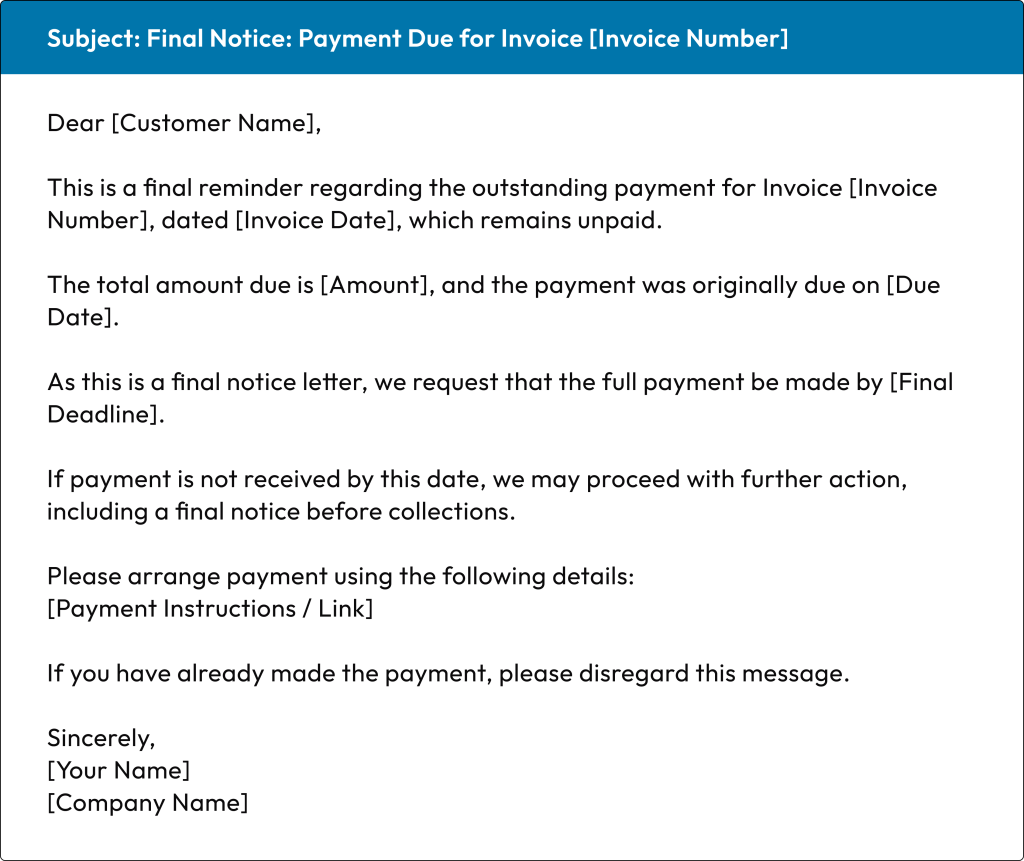
Template 1: Standard Final Notice Letter
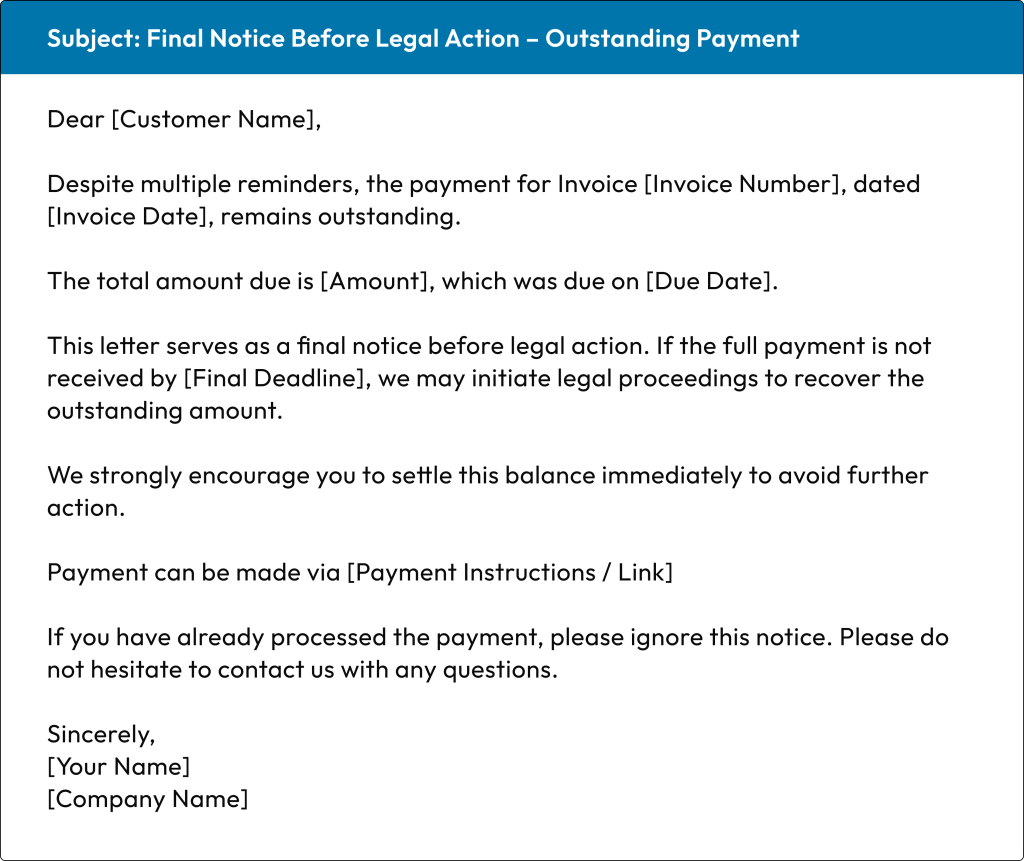
Template 2: Final Notice Letter Before Legal Action
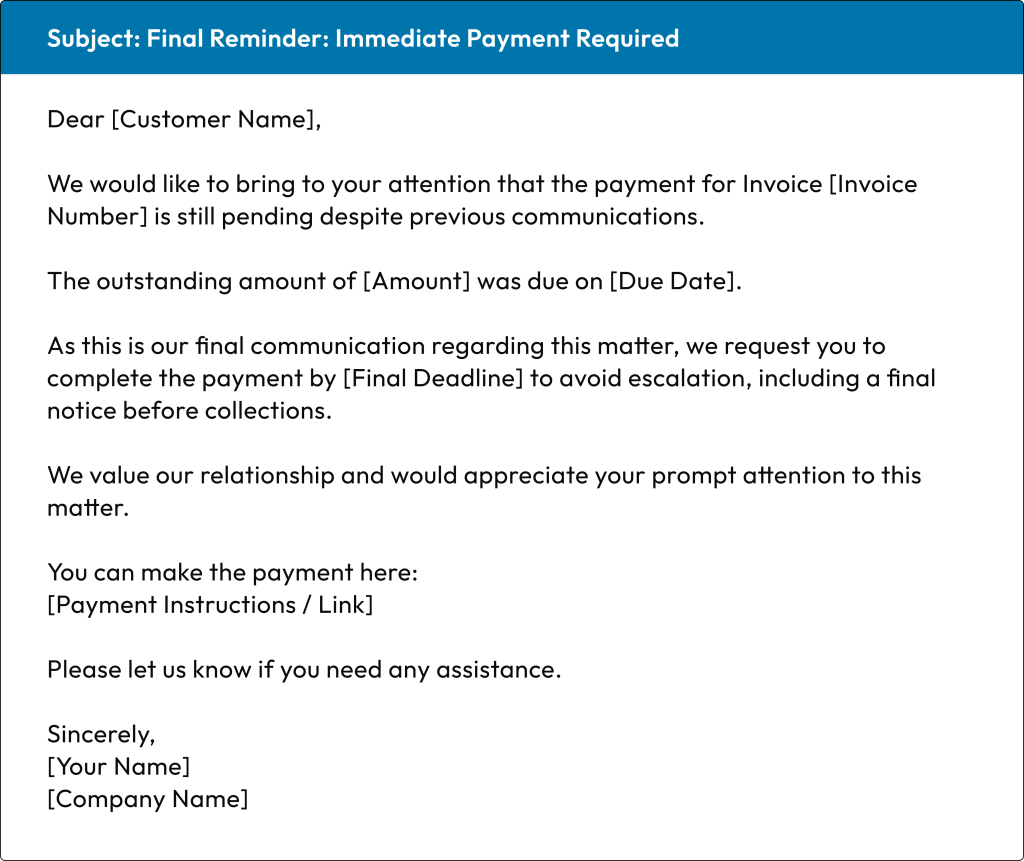
Template 3: Polite but Firm Final Collection Letter to Customer
How to Reduce the Need for Final Notice
While final notice letters are important, relying on them too often is a sign of a broken payment process. The goal should be simple: prevent delays before they happen.
Here’s how businesses can reduce the need for final notices altogether:
➧ Set Clear Payment Terms from the Start
Many payment issues begin with unclear expectations.
Always define:
- Payment due dates
- Accepted payment methods
- Late fees or penalties
Clarity upfront reduces confusion later.
➧ Send Timely Payment Reminders
Waiting until payments are overdue creates unnecessary friction.
Instead, send reminders:
- Before the due date
- On the due date
- Shortly after a missed payment
This keeps payments top of mind for customers.
➧ Make Payments Easy and Convenient
If the payment process is slow or complicated, delays are inevitable. Ensure customers can pay quickly, without multiple steps or confusion.
➧ Offer Flexible Payment Options
Not all customers delay payments intentionally—sometimes it’s about affordability. Providing flexibility (like installments or partial payments) can significantly improve collection rates.
➧ Track and Monitor Outstanding Payments Proactively
Without visibility, delays go unnoticed until it’s too late.
Regularly monitor:
- Overdue invoices
- Customer payment patterns
- High-risk accounts
Proactive tracking enables early action, even before a final notice is necessary.
Common Mistakes to Avoid When Writing a Final Notice Letter
A final notice letter should drive quick action—but small mistakes can delay payments. Avoid these:
- Being too aggressive: Stay firm, not threatening—protect relationships and avoid risks.
- No clear deadline: Always set a specific due date to create urgency.
- Missing key details: Include amount due, invoice reference, and clear payment instructions.
- Complicated payment process: Make it quick and easy to pay—friction causes delays.
- No follow-up: One final notice isn’t always enough—timely follow-ups matter.
How Recuvery Helps You Get Paid Faster
Traditional collection methods rely on manual follow-ups, delayed communication, and rigid processes—often leading to missed payments and strained customer relationships.
Recuvery takes a different approach by combining automation, flexibility, and customer-first collections to improve recovery outcomes.
✦ Automated Follow-Ups
Stay ahead of missed payments with timely reminders—reducing the need for repeated collection letters final notice.
✦ Easy, Self-Service Payments
Unlike a static final notice template, customers can quickly view dues and pay without friction.
✦ Flexible Payment Options
Avoid escalation to a final notice letter before legal action by offering payment flexibility that improves recovery.
✦ Smarter Recovery Insights
Act early instead of relying on a final notice letter example by prioritizing high-risk accounts.
✦ Centralized Visibility
Track and manage all payments in one place without juggling multiple final notice letters.
Final Words
A final notice is not just another reminder, it’s the turning point where overdue payments either get resolved or escalated. A well-crafted letter can prompt immediate action and bring clarity to the situation.
But the real goal isn’t to rely on collection letters final notice—it’s to reduce the need for them altogether.
Use a clear final notice template, take guidance from a proven final notice letter example, and send a final notice before collections or a final notice letter before legal action when necessary.
At the same time, strengthen your payment process with clear terms, timely reminders, and easy payment options.
Because the most effective collections strategy isn’t chasing payments—it’s preventing delays in the first place.
Turn Final Notices into Paid Invoices with Smarter, Automated Debt Recovery Solutions
Schedule a Demo!Frequently Asked Questions
1. What Does Final Notice Mean?
A final notice means it is the last reminder before further action is taken, such as collections or legal steps. It signals urgency and requires immediate response.
2. How to Write a Final Notice Letter for Work?
Include the customer’s details, invoice information, total amount due, a clear deadline, and the consequences of non-payment. Keep the tone firm, clear, and professional.
3. When Should You Send a Final Notice Before Legal Action?
Send it after multiple reminders have been ignored and the payment is significantly overdue, just before starting legal proceedings.
4. What Should a Final Notice Before Legal Action Include?
It should include the outstanding amount, invoice details, a final payment deadline, and a clear statement that legal action may follow if payment is not made.
5. When and Why to Send a Final Notice Letter?
Send a final notice after repeated failed reminders. It helps create urgency, improve payment chances, and prepare for escalation if needed.